Nietzsche wanted to be a successful composer but lacked musical talent. However, he took his love of music and made music with his words. His books were written not to be read quietly and studied but to be performed. Nietzsche once said that when he first came across a new text, he asked himself if it would make him dance. He wanted his readers to sing and dance to his texts and composed his books like symphonies.
Friedrich Nietzsche
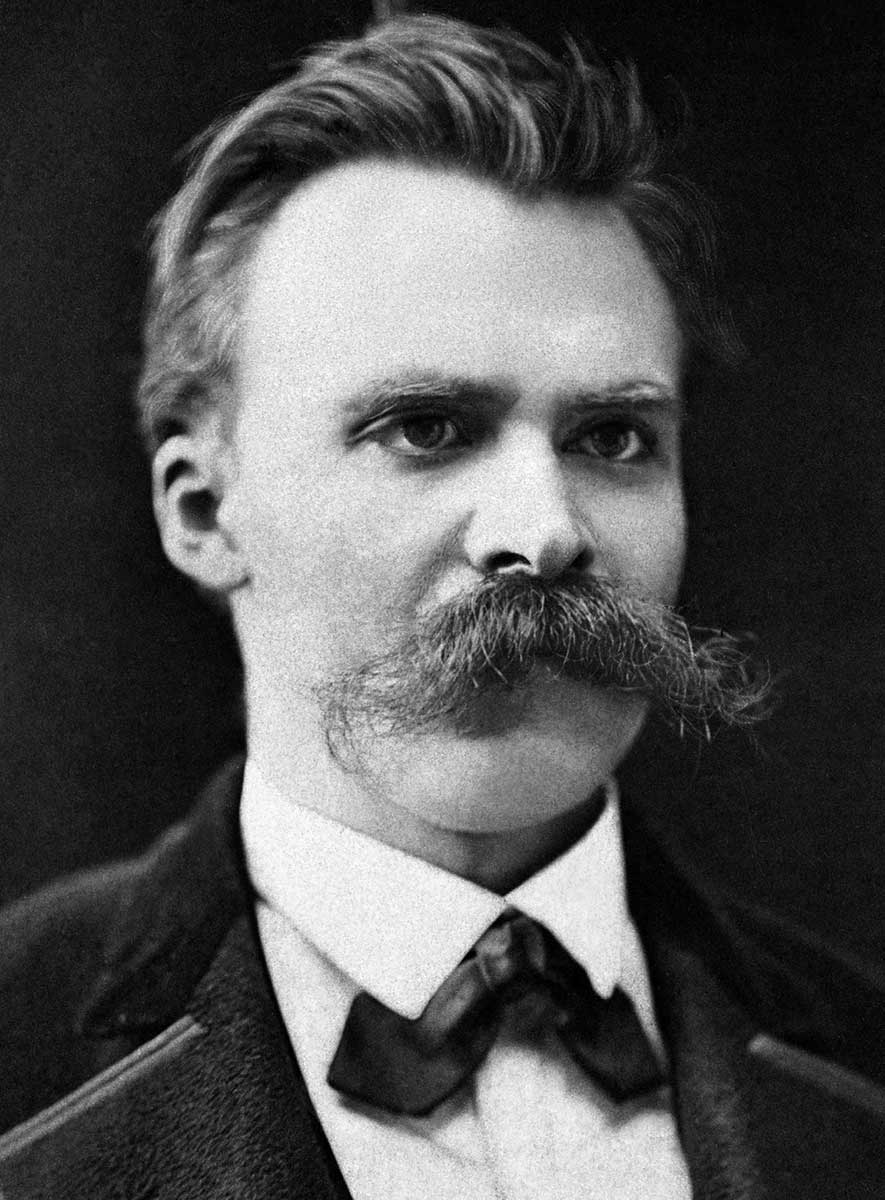
Friedrich Nietzsche was born in October 1844 into a middle-class German family in the Prussian Province of Saxony. He was named after Friedrich Wilhelm IV of Prussia, who was born on the same day as Nietzsche. His father was a religious man and local pastor; he died at age thirty-five when Nietzsche was just four years old. The cause of his father’s death is unknown. It may have been as a result of a head injury incurred during a fall or might have been a brain tumor.
Nietzsche feared that his father had passed down to him an inheritable brain condition. He was a sickly man and spent much of his life battling terrible migraines as well as other physical illnesses. Whether Nietzsche inherited a brain condition from his father is the subject of much debate. However, Nietzsche himself succumbed to mental illness and dementia and spent the last decade of his life seriously ill. He died in 1900, aged fifty-five.
Nietzsche’s illnesses notwithstanding, his output was impressive. He was capable of producing great works in very short periods. In the year 1888 alone, he produced The Case of Wagner, Twilight of the Idols, The Antichrist, Ecce Homo (not published until 1908), and Nietzsche Contra Wagner. A great philosopher and talented classicist, he was made a professor of philology at the University of Basel at just twenty-four years old. Nietzsche had a love of music.
One of the most important influences on his early development as a thinker was the German composer Richard Wagner and his wife Cosima, daughter of the Hungarian composer Franz Liszt. Indeed, his first published work, The Birth of Tragedy Out of the Spirit of Music (1872), was greatly inspired by his discussions with Wagner.
Nietzsche’s Musical Ambitions
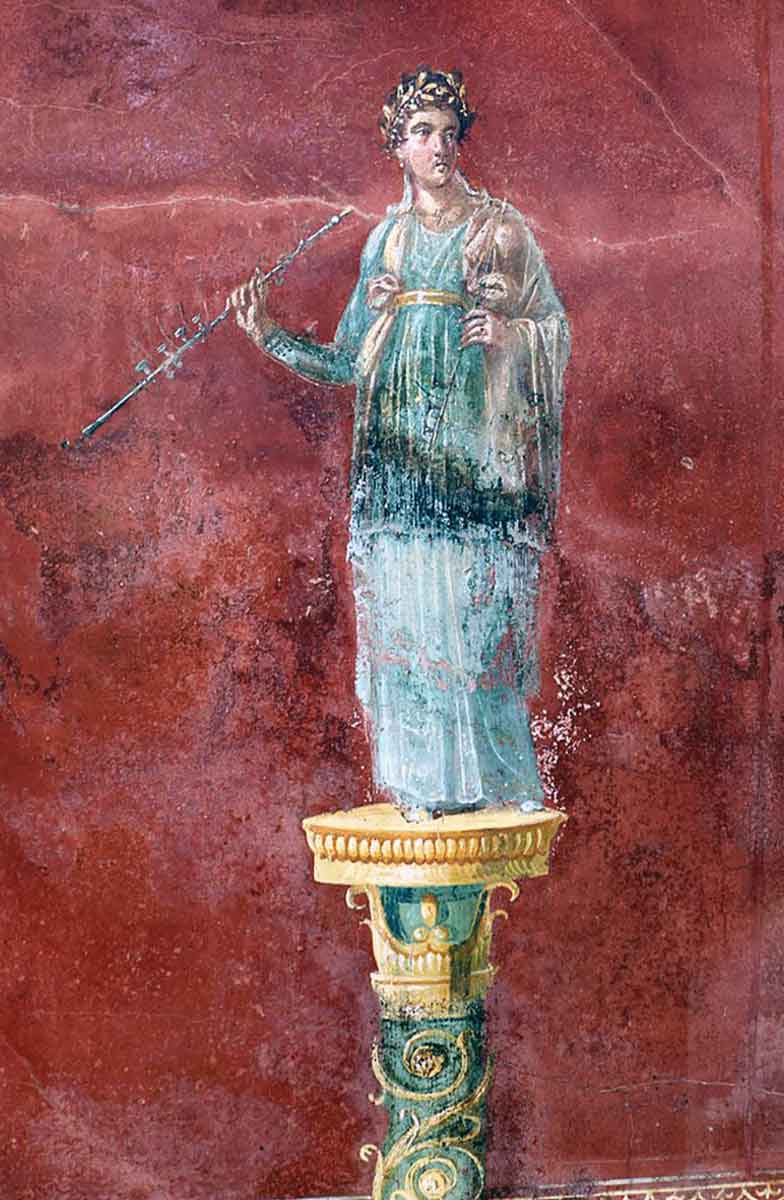
Nietzsche did not want to simply write about music; he wanted to play and compose music for himself. Unfortunately for him, his musical ability was in no way a match for his philosophical and literary talents. While still at school, Nietzsche experimented with writing poetry and composing music. He was also the leader of a music club called ‘Germania.’ Indeed, in the 1850s, he wrote many compositions for the piano, violin, and voice. However, these were all the work of an enthusiastic amateur and showed no signs of genuine musical talent.
In 1871, Nietzsche composed a piano piece as a birthday gift for Cosima Wagner. It is rumored that her husband Richard, then still a friend and mentor to Nietzsche, privately mocked the piece. The worst reaction Nietzsche received to his music, and possibly the worst reaction any piece of music has ever received, came from the German conductor, pianist, and composer Hans von Bülow.
Bülow was instrumental in establishing Richard Wagner’s success. There was a family connection of sorts between Bülow and Wagner in that Bülow was the former husband of Cosima, Wagner’s wife. Bülow had also previously been a student of Franz Liszt, Cosima’s father. In his review of a piece of music by Nietzsche, Bülow commented that not only was it the most unmusical thing he had ever encountered, but he went on to suggest that Nietzsche’s attempts at music amounted to the rape of Euterpe, the spirit of music!
Opinions about Nietzsche’s musical abilities have softened over the years, with the occasional concert held to let others judge for themselves. However, these events are more curiosities than serious musical productions.
Nietzsche on Words and Music
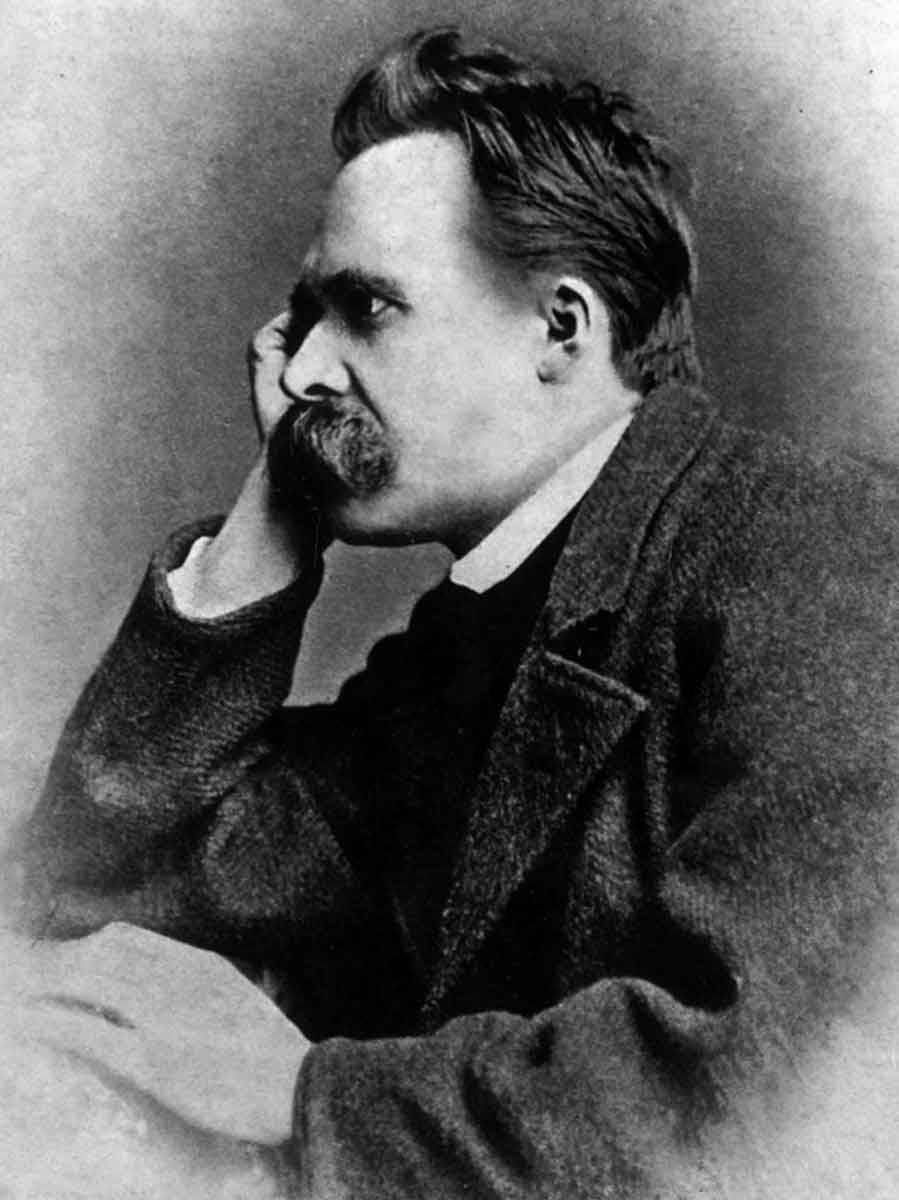
Nietzsche’s first essay on music is a short 1872 effort called ‘Music and Words.’ He begins with remarks on verbal and nonverbal communication. Spoken words, he says, are symbols representing the things about which we are attempting to communicate. He says that between the word and the thing there is no connection other than the agreement among speakers of the same language that this word symbolizes that thing. To give an example, the word ‘dog’ in English attempts to communicate the idea of a domesticated descendant of the grey wolf. In French, however, the agreed-upon word is “chien.”
Nietzsche goes on to say that the sound of the spoken word conveys more meaning than the word itself. We are not affected, he says, by the essence of things, but “the play of feelings, sensations, emotions, volitions” are known to us through words. For him, any word can be used to symbolize any object. It is the emotion expressed through the spoken word that carries the impact.
In ‘Music and Words,’ Nietzsche says that all spoken words are just combinations of noise and gesture. Words, he says, cannot be uttered without physical gestures; they are tones made by “the positions of the organs of speech.” Pleasure and displeasure are expressed through the tone of the speaker, and further meaning is expressed through gesture.
The key point here is that, for Nietzsche, a word is not a “direct bridge that can take us to the innermost nature of things.” Instead, sound is far more important for conveying meaning than written words.
The Birth of Tragedy
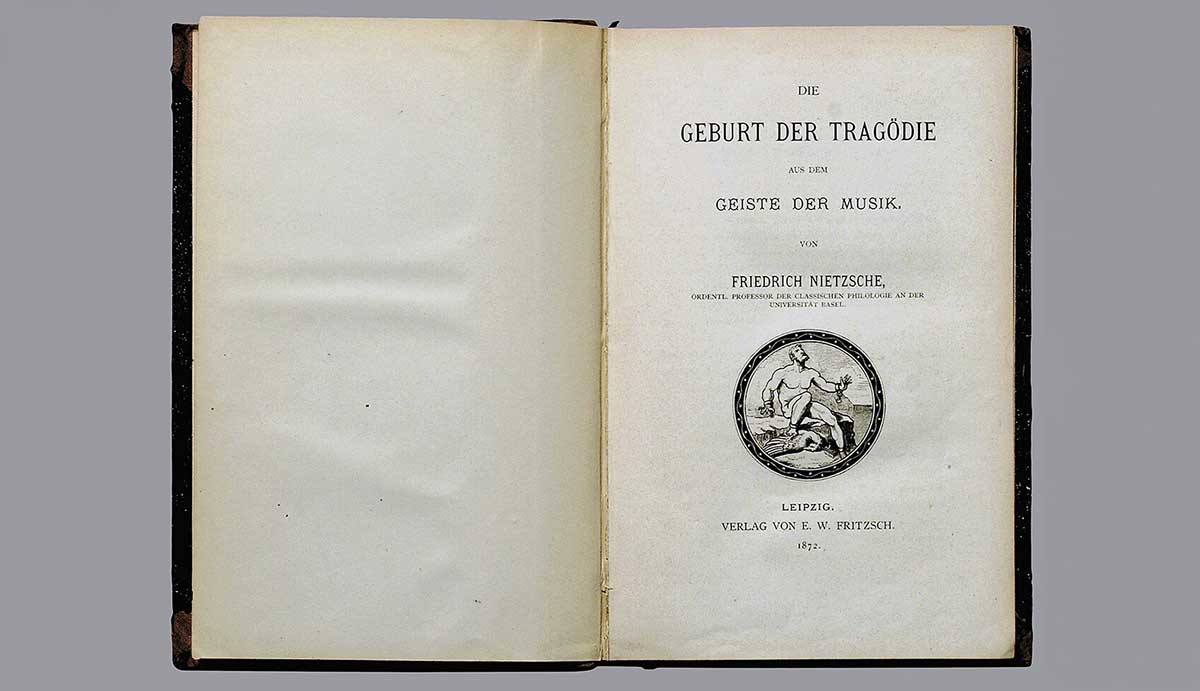
We have seen that for Nietzsche, the sound, or the spoken word is better at communicating ideas than the written word. Knowing this, we could expect him to say that reading his works aloud would be preferable to sitting and reading the text in one’s head. And Nietzsche is no fan of sitting down. In his philosophical autobiography Ecce Homo, he writes, “Sit as little as possible; do not believe any idea that was not conceived while moving around outside, – with all your muscles in celebratory mode as well.”
However, we know that Nietzsche goes further than this. He wants his works not simply to be read aloud but sung. In a new introduction to his first published book, The Birth of Tragedy (1872), Nietzsche said that the text should be sung to be properly understood. It is clear from what he has said about many of his works that Nietzsche considers his writing to be music. Writing in 1888, in Ecce Homo, he refers to his Thus Spoke Zarathustra (1883) as a piece of music. In addition, in a letter to his friend Peter Gast, Nietzsche referred to The Case of Wagner as “operetta music.” It was also in a letter to Gast that Nietzsche referred to Zarathustra as a symphony.
It seems that the failed composer saw the opportunity in this writing to create the music he could not achieve in the conventional way.
We have seen that Nietzsche considered his Zarathustra as a symphony. In his 2017 text Nietzsche’s Final Teaching, Nietzsche scholar Michael Allen Gillespie makes the case that Twilight of the Idols is also structured like a classical symphony. The text has the characteristic three (or four) movements, with themes, developments, recapitulations, and codas. Gillespie argues that even a time signature is recognizably present.
Singing Nietzsche?
We saw that music was a central interest for Nietzsche. He had aspirations to compose music, if not necessarily as a professional, then certainly as a gifted amateur. However, as we have seen from Richard Wagner’s response to Nietzsche’s composition for piano (some sources say Wagner was rolling on the floor laughing) and Bülow’s crushing review, Nietzsche did not have a gift for music.
But his love for music, without a doubt, influenced his work. We have also seen that Nietzsche’s texts can be read not just as writing on music but as a kind of music itself. Nietzsche clearly wanted his texts to be performed, or at least to be read aloud. We remember that in his essay ‘Music and Words’ he was interested in how emotions were conveyed through spoken words. In particular, how, along with gestures, the “play of feeling and sensations” can be expressed vocally when giving a reading. Clearly, Nietzsche recognized the value of musicality in his texts.
Nietzsche was a classicist and greatly admired the Greeks. In the Ancient world, philosophy was primarily spoken. Ideas were, of course, written down (otherwise we would not have access to them today), but texts were typically considered a means of preserving ideas rather than something one would sit down to read. It is notable that Socrates, a hugely influential figure for Nietzsche, never wrote anything down. Indeed, he was opposed to the written word, deeming it harmful to learning. Philosophy, then, in the Greek world, was expressed in the spoken word.
Singing surely conveys more emotion through tone and gesture than merely reading aloud. Nietzsche wants to communicate as much feeling as possible through his works. It therefore makes sense for him to want his books to be sung.