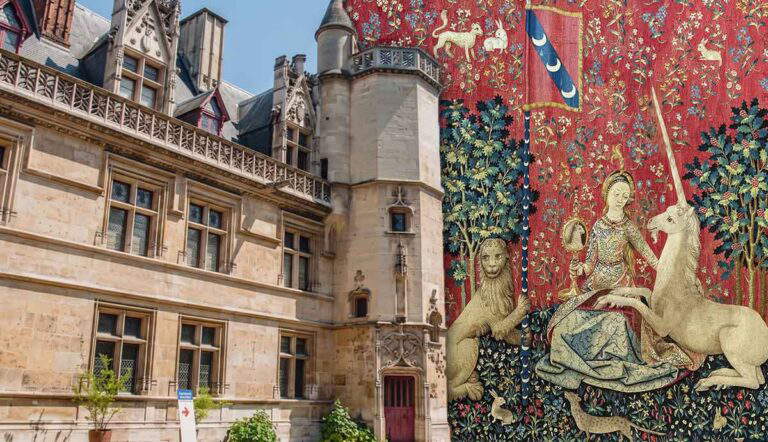
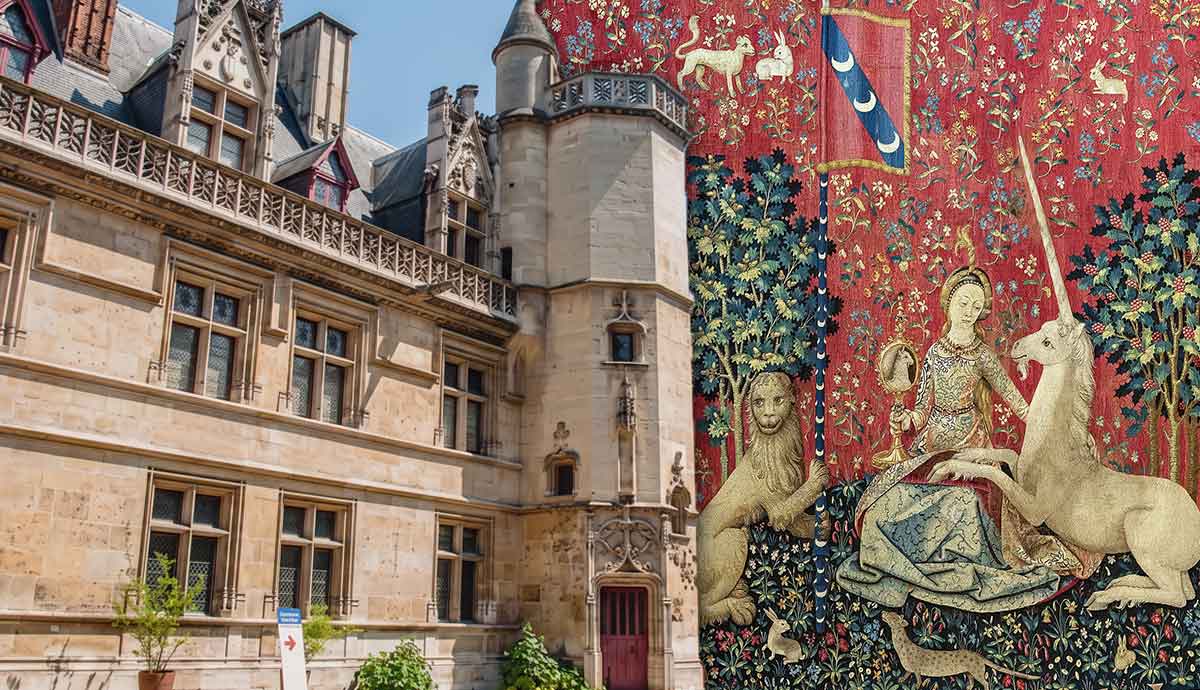
Beautiful, delicate, intricate, and amazing are words to describe tapestries. Among the greatest of French tapestries (and European textiles) is the Lady and the Unicorn series. Commissioned in the 1500s, it remains one of the greatest examples of Renaissance textile art.
Housed at the Cluny Museum in Paris, France, the Lady and the Unicorn is a medieval mystery because it lacks an exact provenance and is blanketed in metaphorical iconography. Are these tapestries a demonstration of wealth, a symbol of love, or simply large art pieces meant to delight?
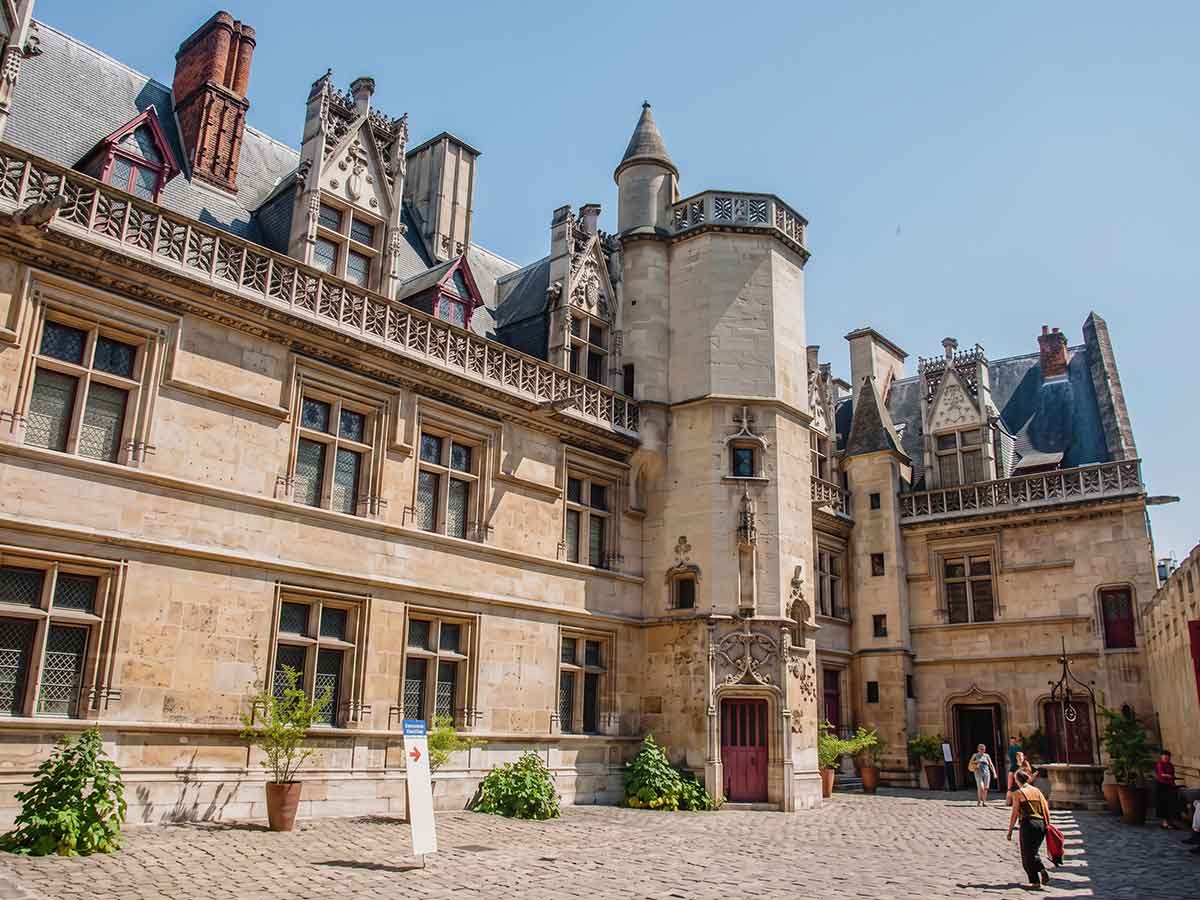
The Masterpiece in the Cluny Museum
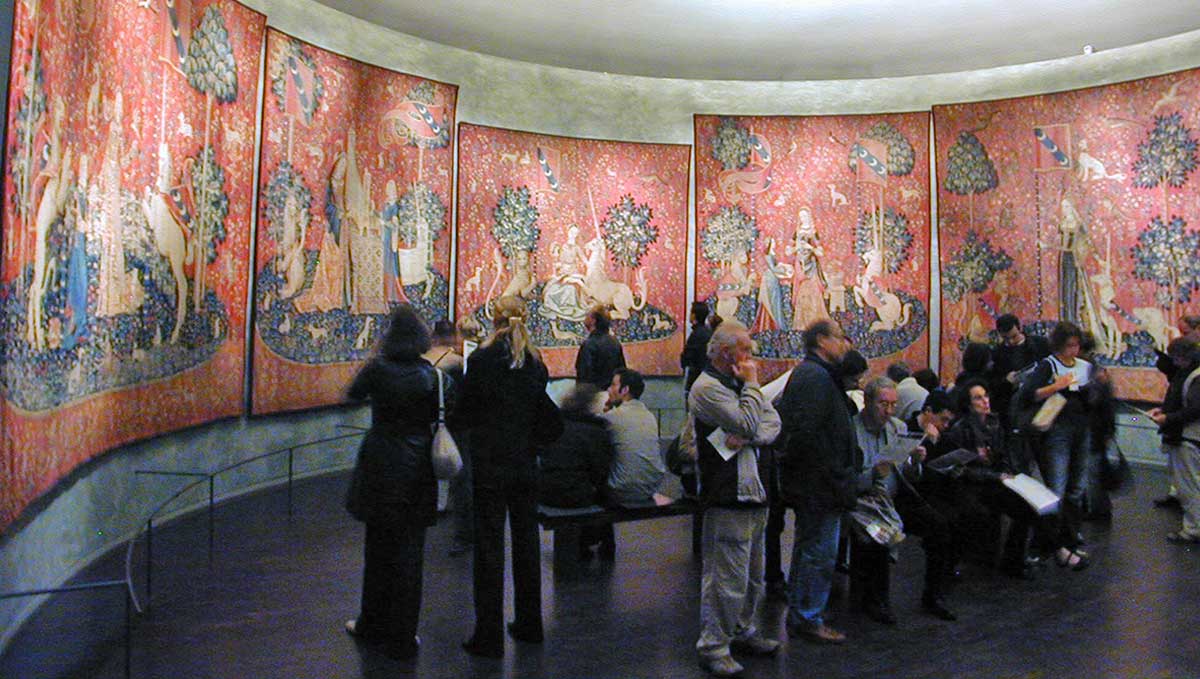
The Lady and the Unicorn series is also known as the Cluny Tapestries. As prized pieces of medieval art, they are decorated with motifs and iconography that were made popular during that era. The six tapestries are festooned with a red millefleur (thousand-flowers) background, where a noblewoman, a handmaiden, a lion, a unicorn, a monkey, and other animals rest. The banner of the Le Viste family is shown throughout the pieces: a red field with a blue sash decorated with three crescent moons that help identify its provenance.
The noblewoman has several meanings, including virginity, purity, wealth, and beauty. She might represent a real person or simply an idealized version of womanhood. The unicorn has similar meanings, except that it can also represent Christ. The lion is another famous figure in medieval iconography and means bravery, nobility, strength, and valor. Biblically, it could refer to the Lion of Judah that was the coat of arms of Jerusalem. Five of the tapestries invoke physical senses, while the sixth references an ineffable sixth sense.
Decoding the Allegory of the Five Senses
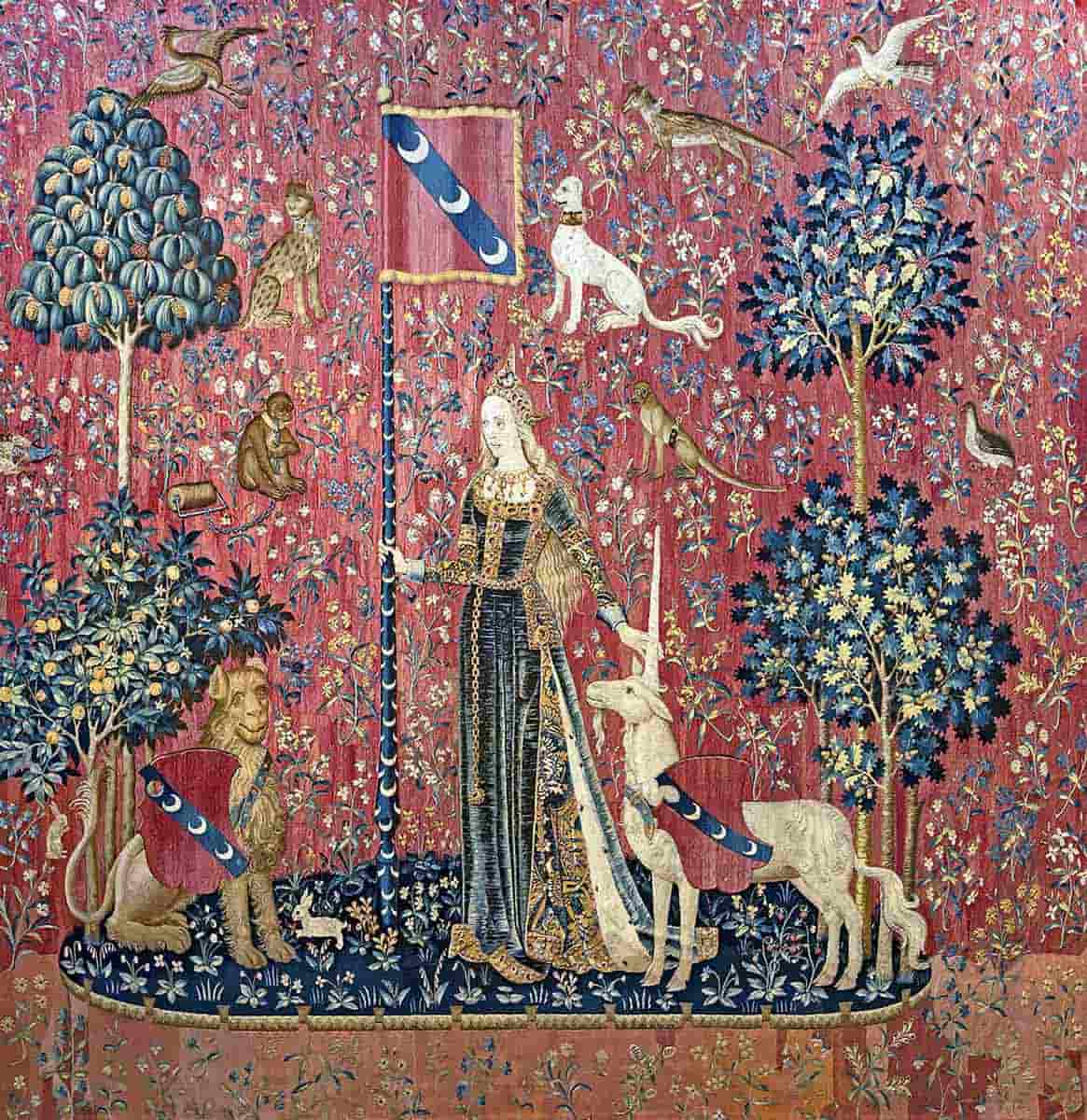
Each of the five senses is invoked by iconography in the Lady and the Unicorn tapestries. The first sense, touch, is represented by the noblewoman firmly holding the Le Viste banner and resting a hand on the unicorn. Her dress is made of expensive, fine fabrics: blue velvet lined with ermine, embroidered orphreys, and exquisite gold work. There are many animals in the background, including a dog, a wolf, a panther, a cheetah, and monkeys. They wear collars indicating they are domesticated.
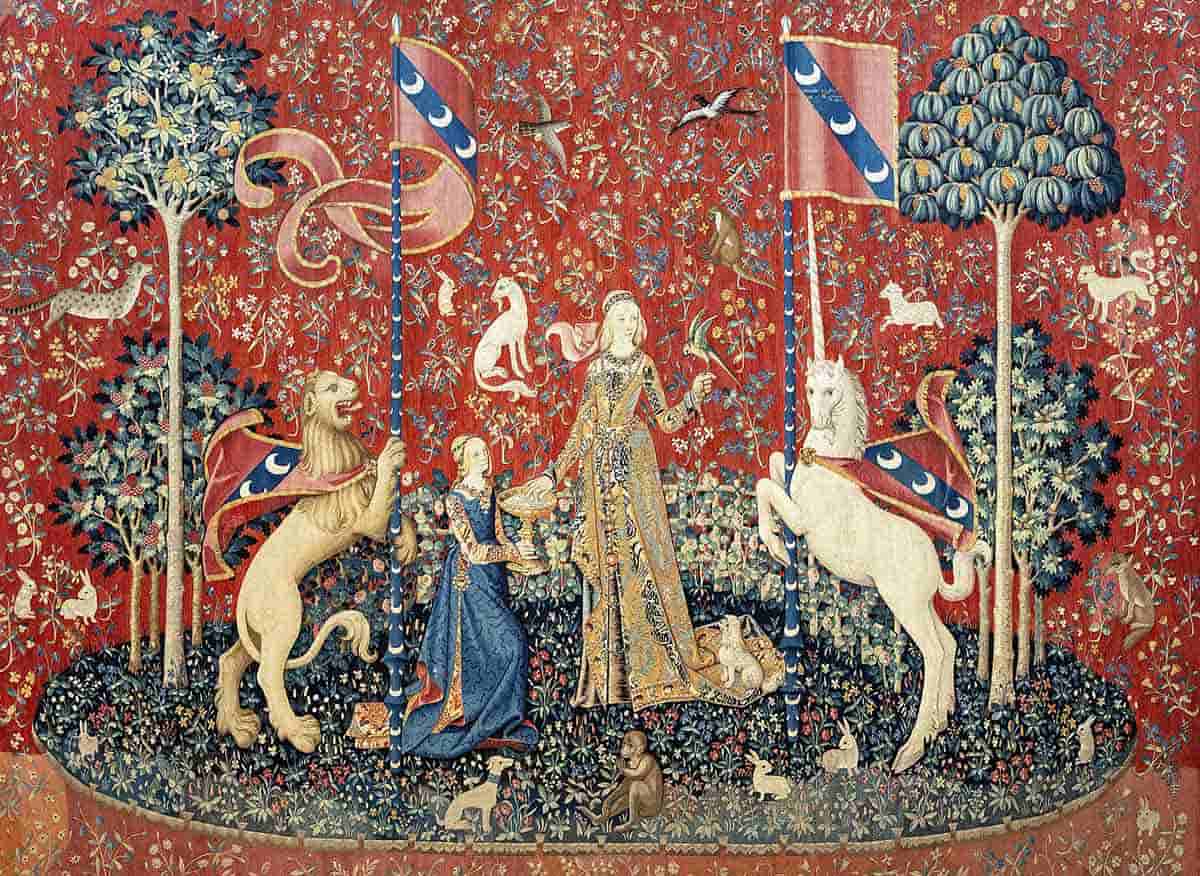
The second tapestry calls on taste as the lady grabs a sweet treat from a bowl held by the handmaiden. The sweet is intended for the parrot perched on her finger. A monkey eats a piece of fruit in the background. The woman’s dress is decorated with vegetal ornaments, including a pomegranate on her belt.
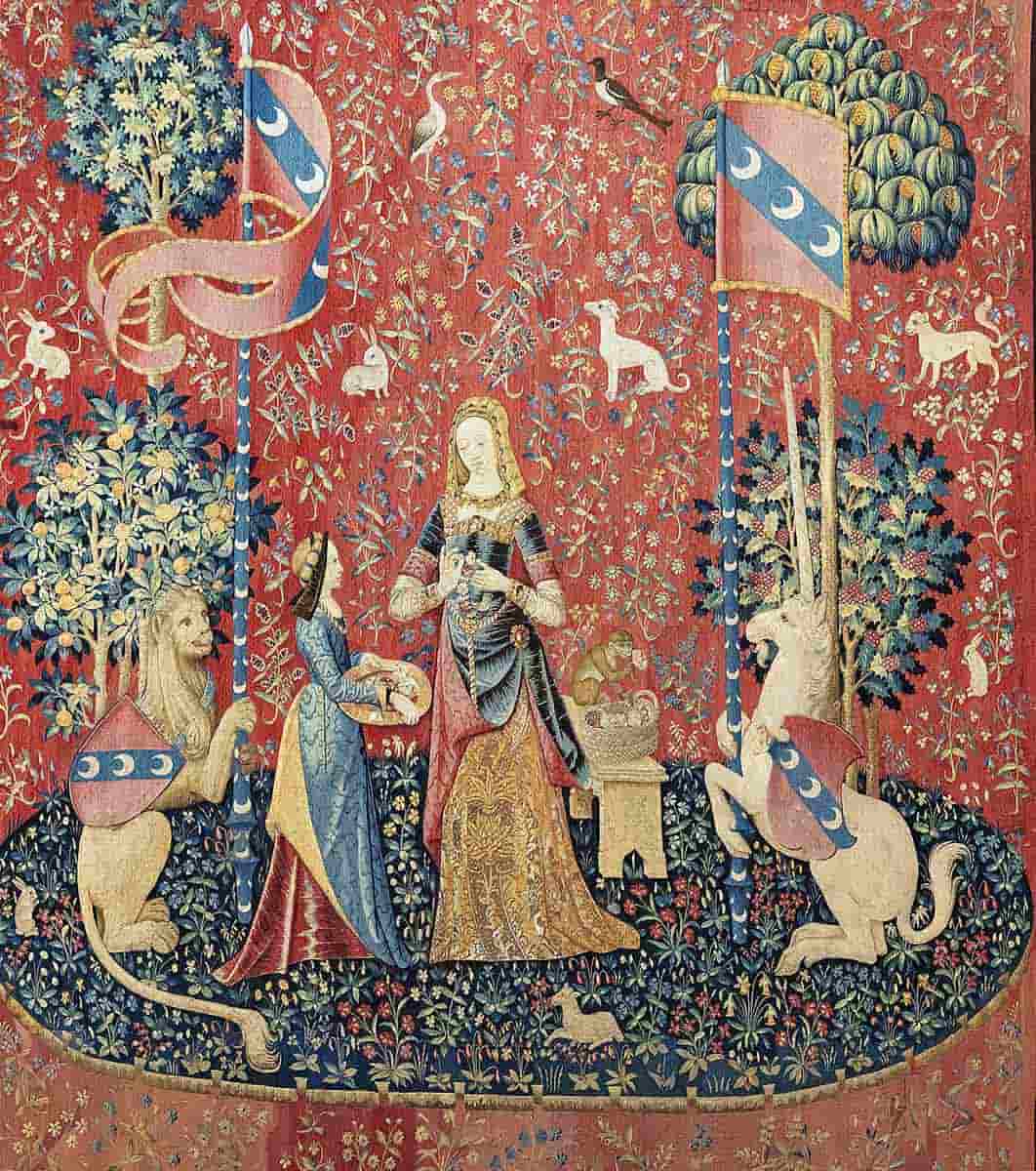
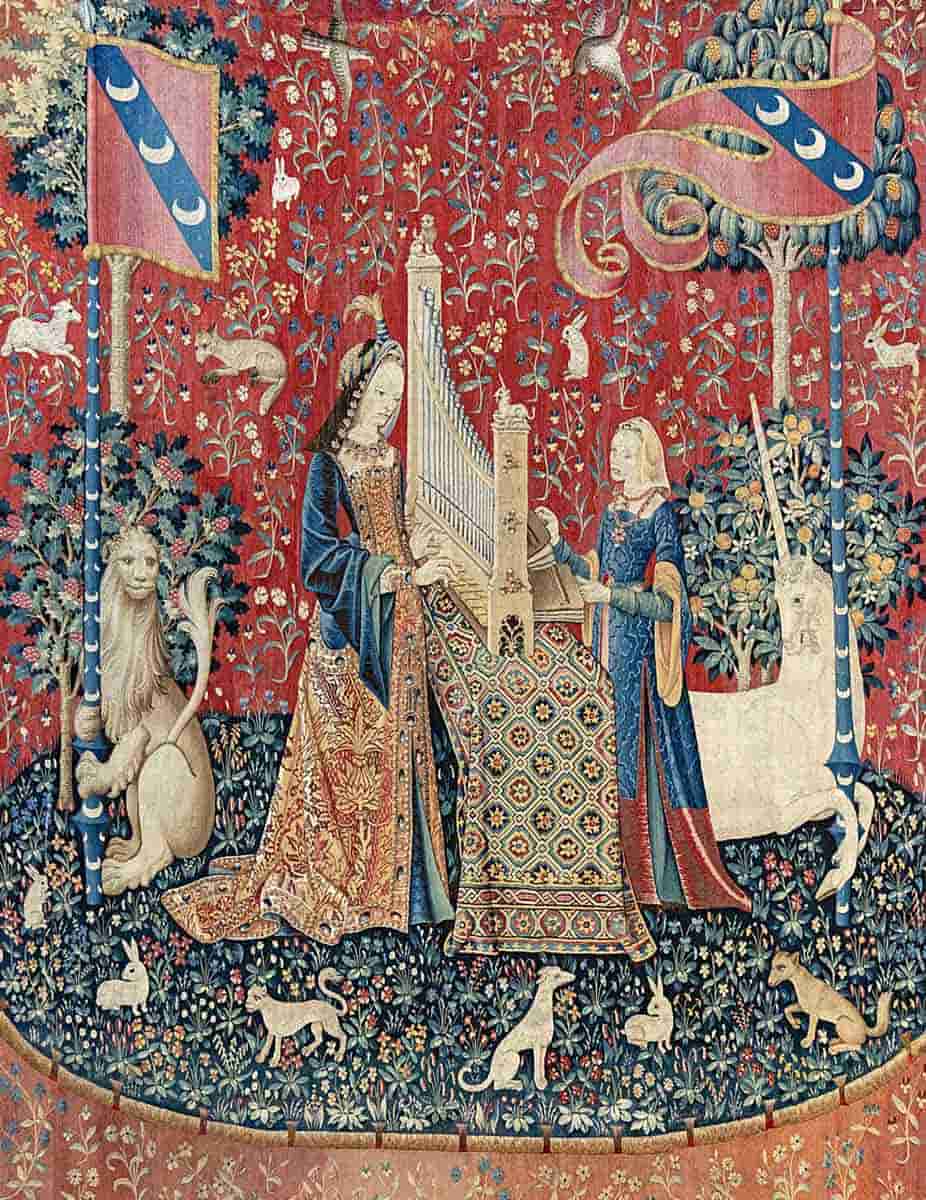
Smell is invoked in the third tapestry as the lady makes a wreath of carnations from a tray carried by the handmaiden. A monkey also smells a rose near them. The fourth tapestry reminds us of the sense of hearing, because the noblewoman plays a portative organ and her handmaiden manages the bellows.
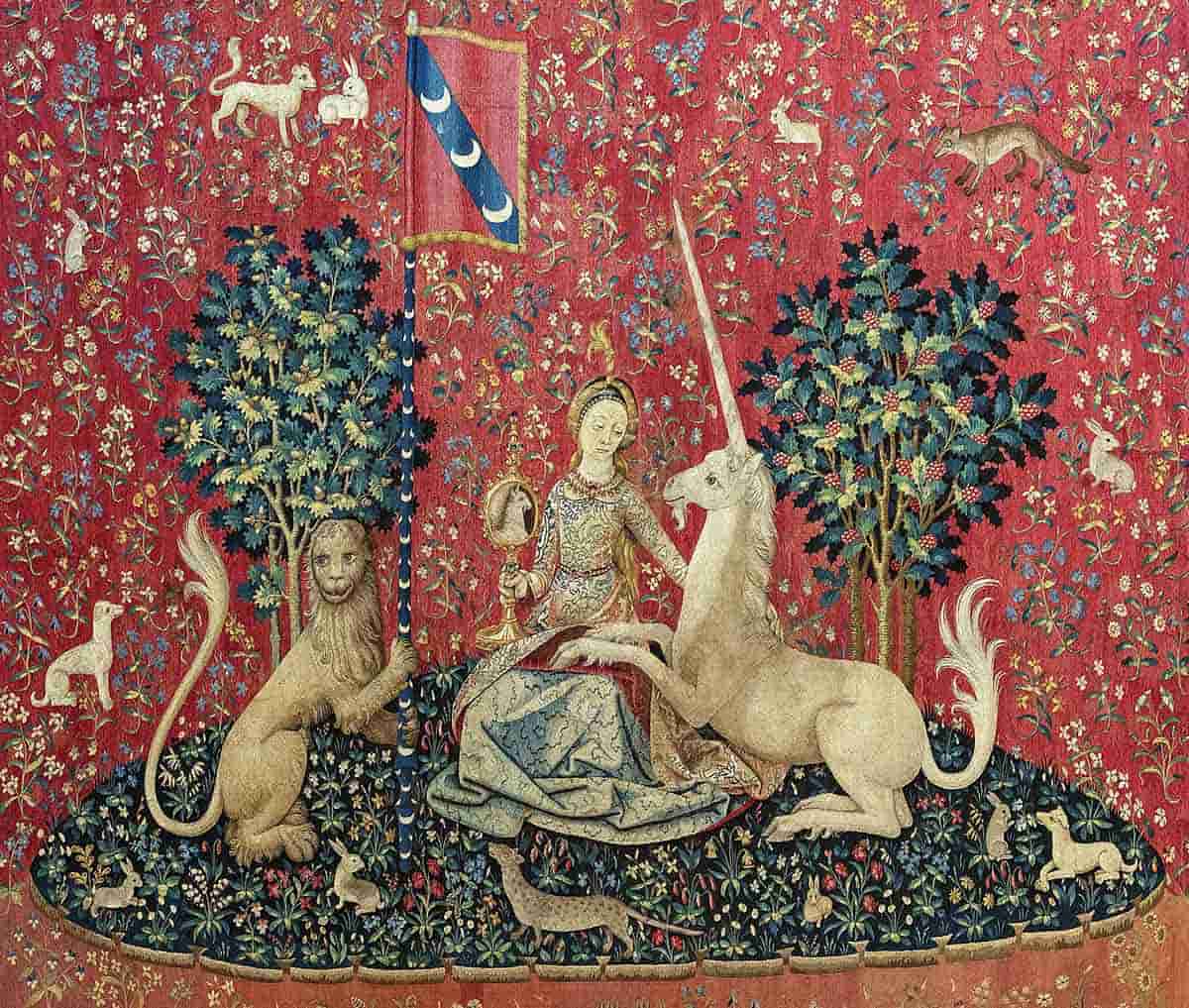
Sight comes into play with the fifth tapestry as the woman sits in the middle of the artwork, holding a hand mirror with the unicorn by her side. The unicorn’s image is reflected back at the pair.
Solving the Riddle of the Sixth Tapestry
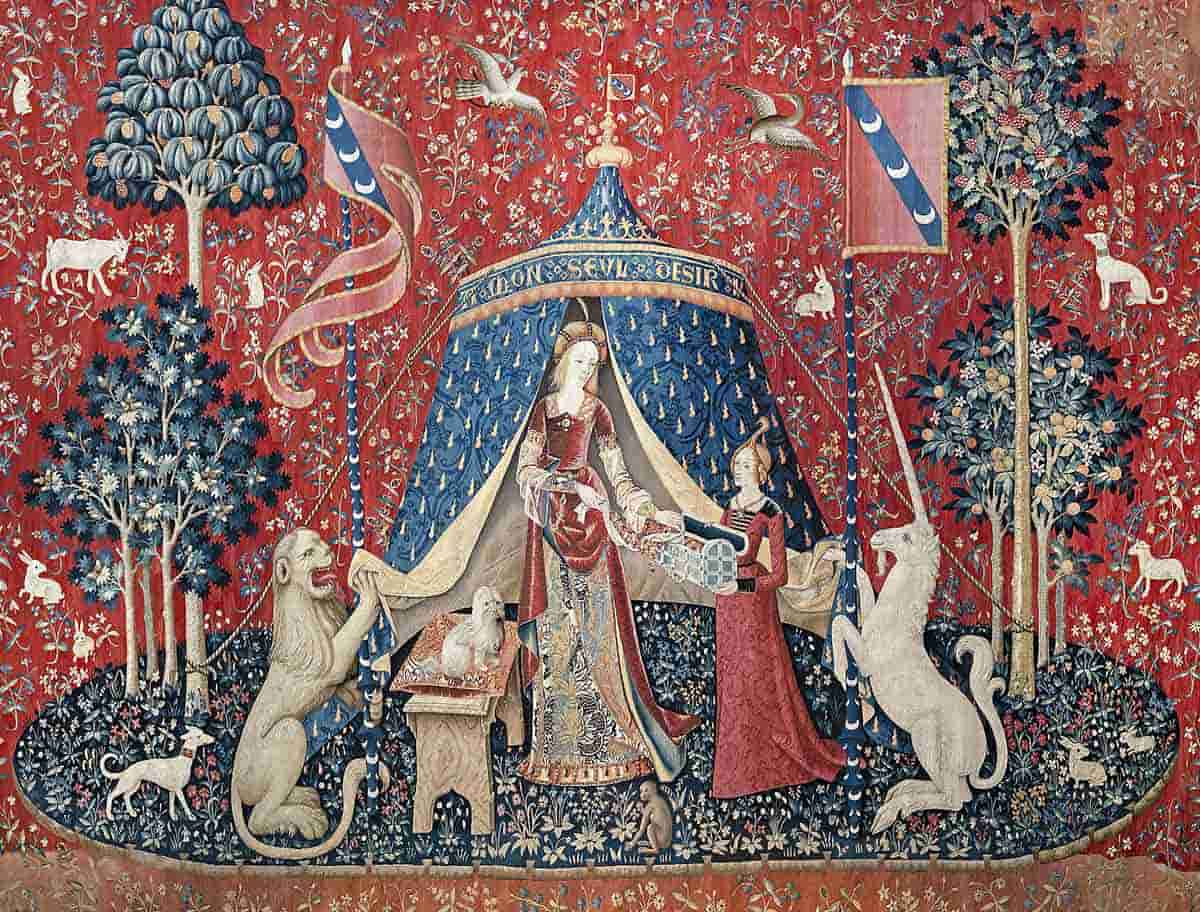
The sixth tapestry was made with a feeling that can only be described as an ineffable quality. It is embroidered with the saying, “À mon seul désir,” which translates to “To my sole desire.” It could represent the heart as the center of moral good and authority, as well as a more down-to-earth quality of human love and carnal desire. The woman stands in the center of the piece with her handmaiden, who is holding a treasure chest. She is either removing or putting a necklace into the chest. They are flanked by the lion and the unicorn.
Here, the lion and unicorn could be a combination of earthly and heavenly desires, with the lion being the former. Lions were regarded as the king of beasts and were seen as violent animals. Meanwhile, the unicorn, as a symbol of Christ, has the purity and love of God. The unicorn’s holiness is unobtainable by humanity. The lion, we know, is a real animal, and unicorns were considered mythological or scarce in medieval times, which is another tie to being unobtainable.
Origins of the Lady and the Unicorn Tapestries
Another great mystery of this textile art (other than the sixth tapestry) is who commissioned its creation. We can tell by the coat of arms, the red field with the blue sash decorated with three crescent moons, seen throughout the pastoral scenes, that the Le Viste family is responsible. They were a prominent family that held positions in the Parisian parliament during the 1500s. As the family grew in power and wealth, they wanted to signal their position to their peers. This was especially true for families who didn’t have noble origins.
Because the entire coat-of-arms is featured in the Lady and the Unicorn tapestries, only someone with high rank and position could have commissioned them. This could have been Jean IV Le Viste, who was the head of the family from 1457 to 1500. After his passing, his cousin Antoine bore the coat-of-arms.
If Antoine had the tapestries made, it could have been a celebration of his becoming the head of the Le Viste family or to signify his engagement to Jacqueline Raguier. The latter is very likely because their first initials “A” and “I” are in the sixth tapestry.