- Culture:
- Ptolemaic
- Period:
- Hellenistic
- Date:
- 196 BC
- About:
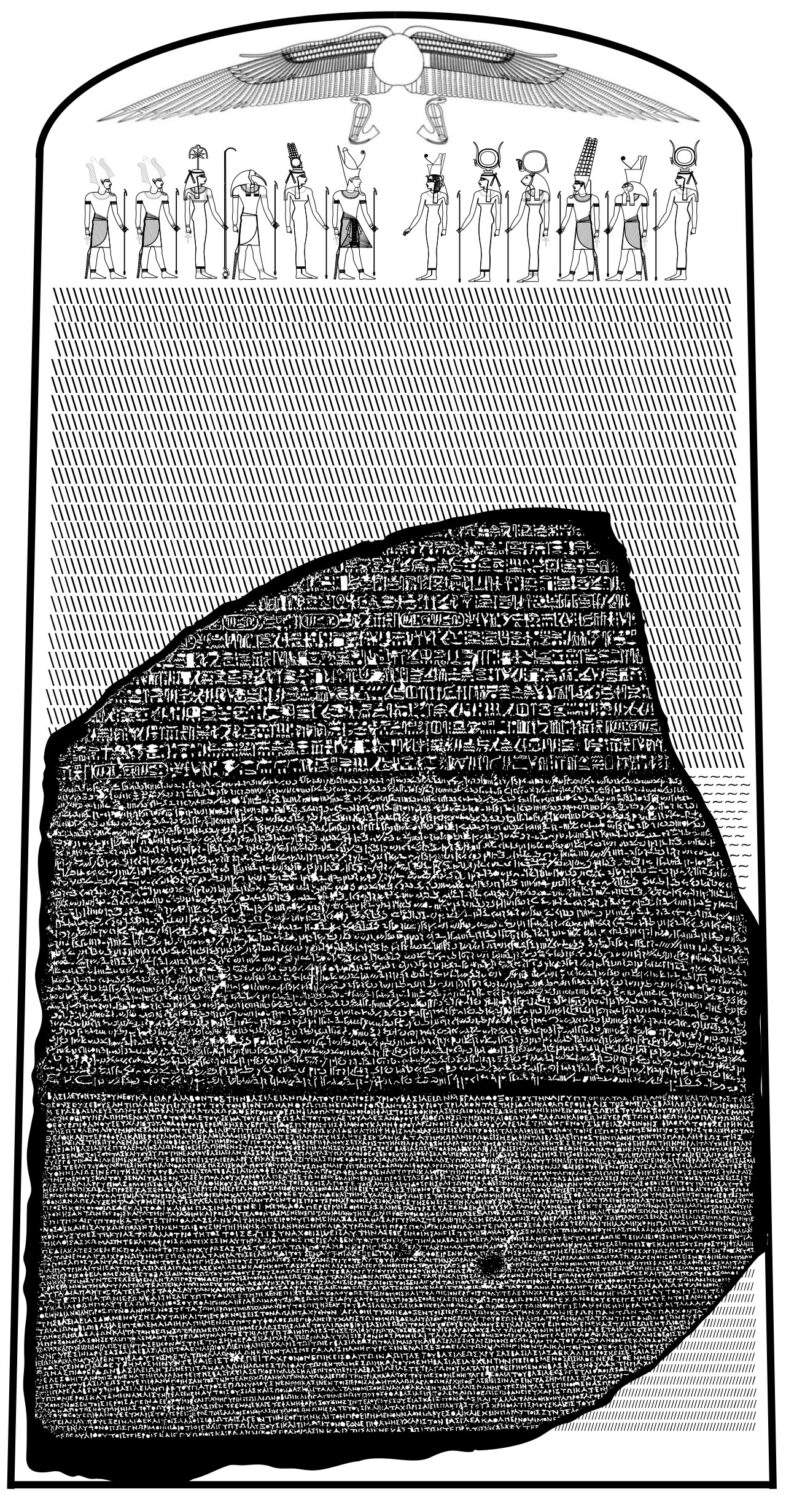
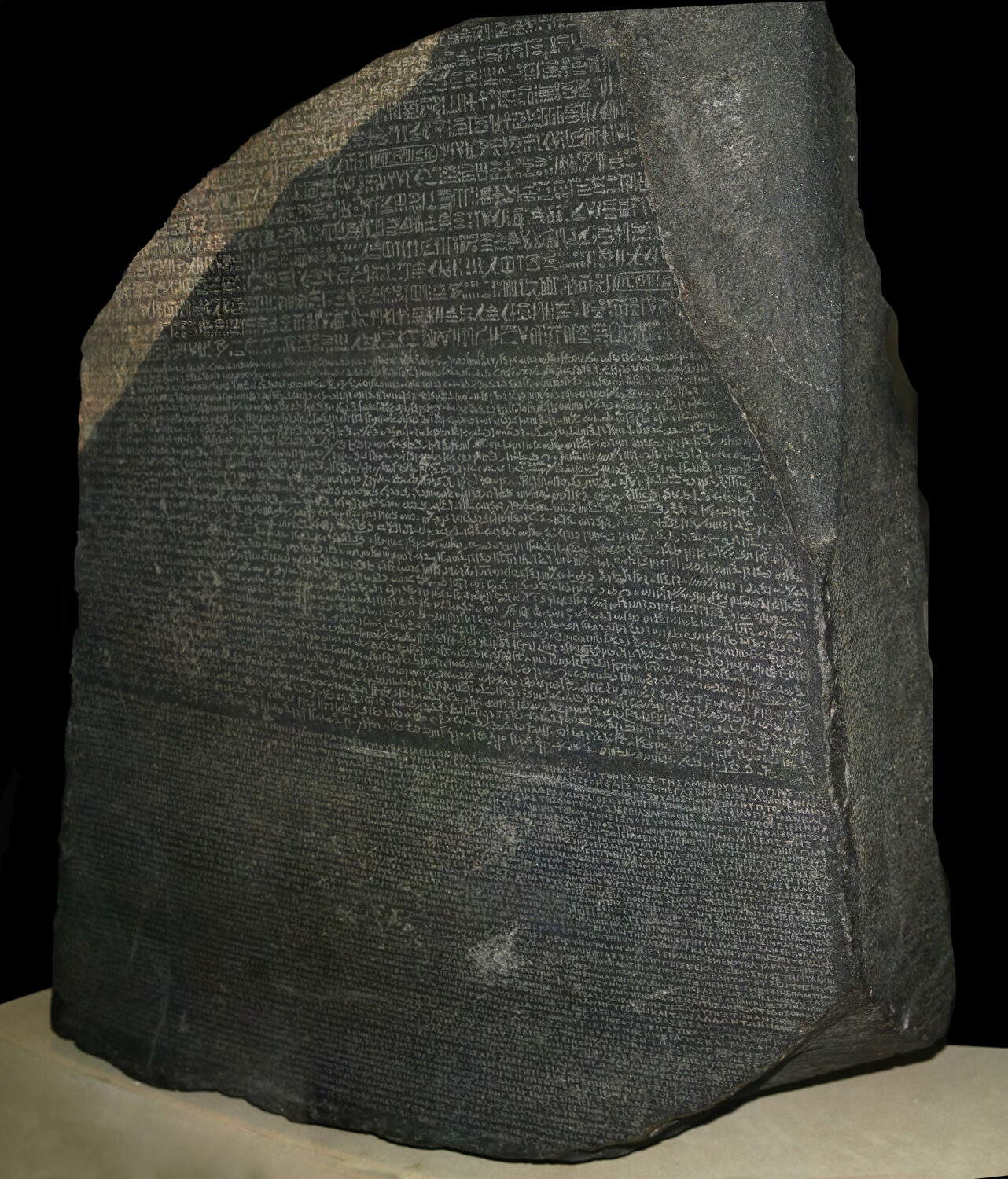
- The Rosetta Stone is arguably the most famous piece of rock in history. A granodiorite fragment of a larger stele, it bears a priestly decree issued at Memphis in three scripts: Ancient Egyptian hieroglyphs, Demotic, and Ancient Greek. This linguistic trifecta provided the essential key for Jean-François Champollion and Thomas Young to crack the code of hieroglyphics, unlocking three millennia of Egyptian history that had been silenced for centuries. Its journey from a temple wall to a fortress foundation, and finally to the world's stage, makes it a true icon of human discovery.
- Alternate Title:
- The Memphis Decree
- Inscription(s):
- A decree issued by a council of priests confirming the royal cult of Ptolemy V Epiphanes on the first anniversary of his coronation.
- Material:
- Granodiorite
- Dimensions:
- H: 112.3 x W: 75.7 x D: 28.4 x Weight: 760 cm