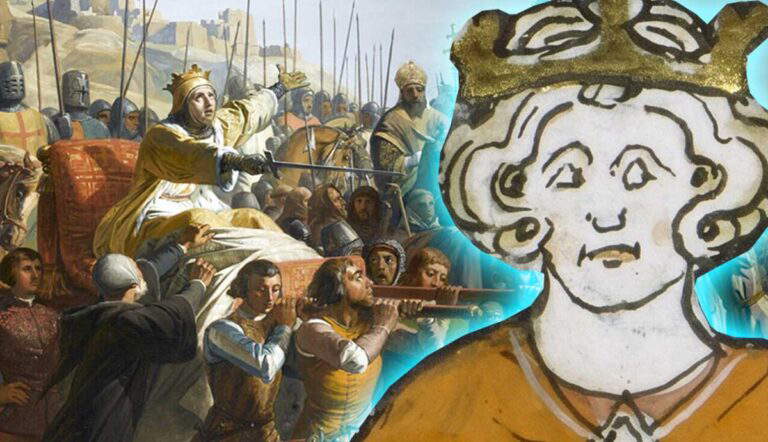
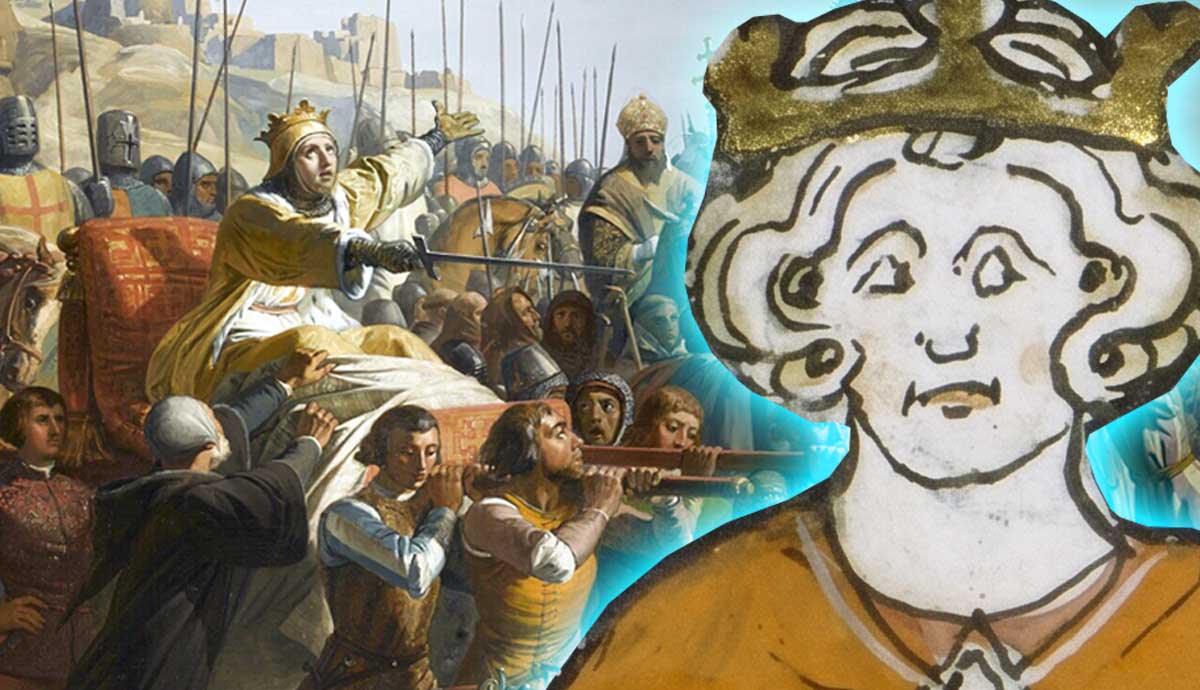
In his short 24-year life, Baldwin IV celebrated many victories against his long-standing rival, Saladin. But his victory at the Battle of Montgisard is undoubtedly his most famous victory. Still recalled by witnesses 80 years later, Baldwin faced impossible odds. Yet his courage and fortitude ensured the 16-year-old Leper King delivered a crushing blow to his opponent.
Baldwin IV, The Leper King
King Baldwin IV came to the throne in 1174, a mere 13-year-old boy following the death of his father, King Amalric. Like the other Crusader States, the Kingdom of Jerusalem was a frontier kingdom, surrounded by hostile Muslim enemies. Warfare and conflict were a fundamental part of life, and kings were required to lead their troops into battle regularly.
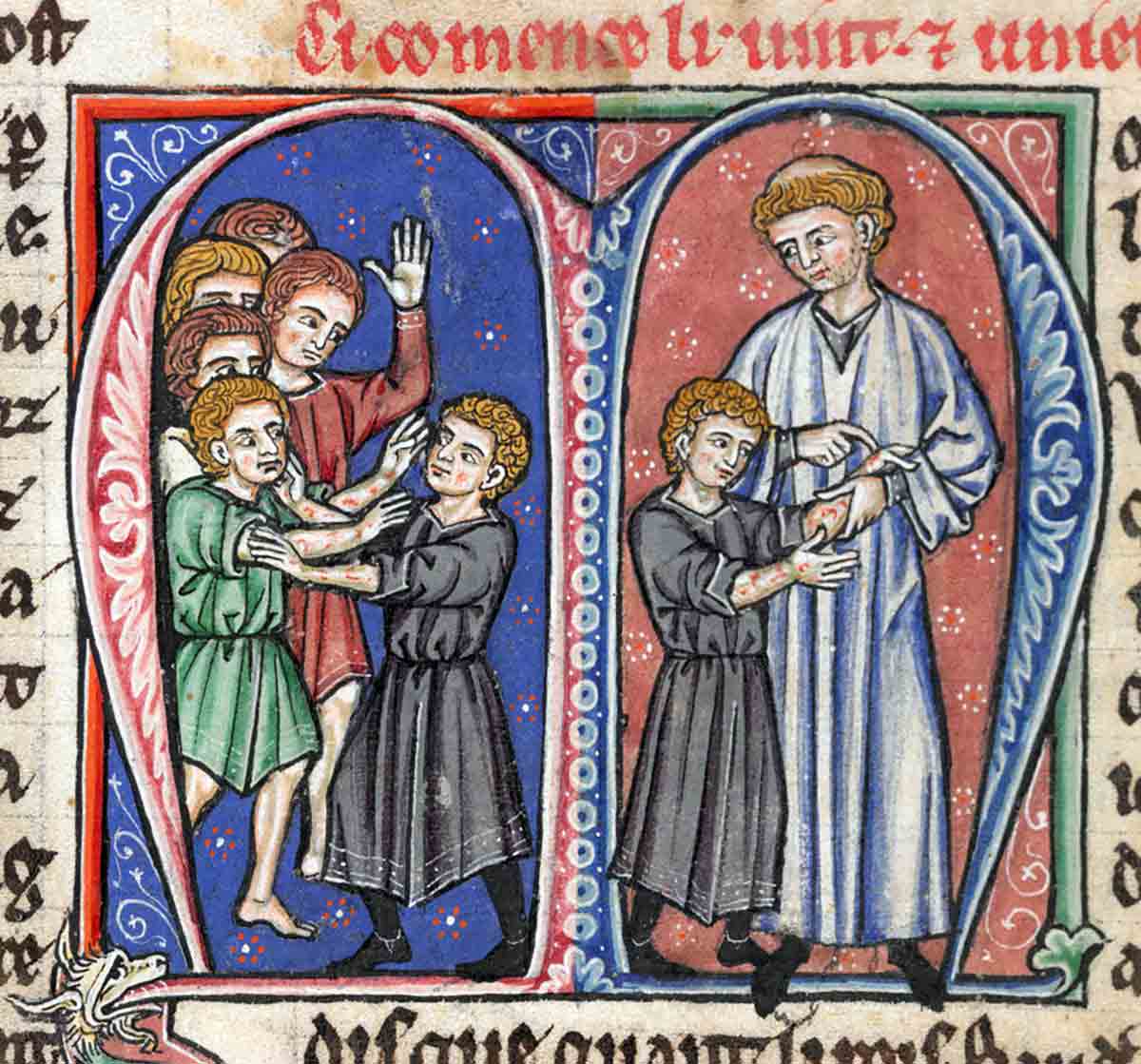
King Amalric had offered the kingdom strong leadership and had been, in many ways, an ideal king. The accession of a boy untested in warfare was a huge blow to the kingdom. But youth was not the only hindrance to Baldwin’s reign. Shortly after his coronation, Baldwin was diagnosed with leprosy, his illness discovered by his tutor and friend, the chronicler William, Archbishop of Tyre.
Saladin, Sultan of Egypt and Syria

The start of Baldwin’s reign coincided with the rise of the greatest threat to the Crusader States: Saladin. Saladin was the ambitious sultan of both Egypt and Syria and sought to unite the fractured Muslim kingdoms under one ruler before striking a decisive blow against the Christians residing in Syria. Ultimately, recapturing Jerusalem was his goal.
Saladin was ruthless and had secured a series of victories in Syria, defeating his Muslim opponents. Seizing Damascus, his growing influence in the region was a cause for concern for Baldwin. His victories in Hama and Homs, followed by gains in northern Syria, emboldened him further. In 1177, Saladin ended his campaigns in Syria and returned to Egypt to plan his next invasion. This time, his target would not be Muslim rulers who opposed him; he now turned his attention to the Crusader States.
The Arrival of Count Philip of Flanders
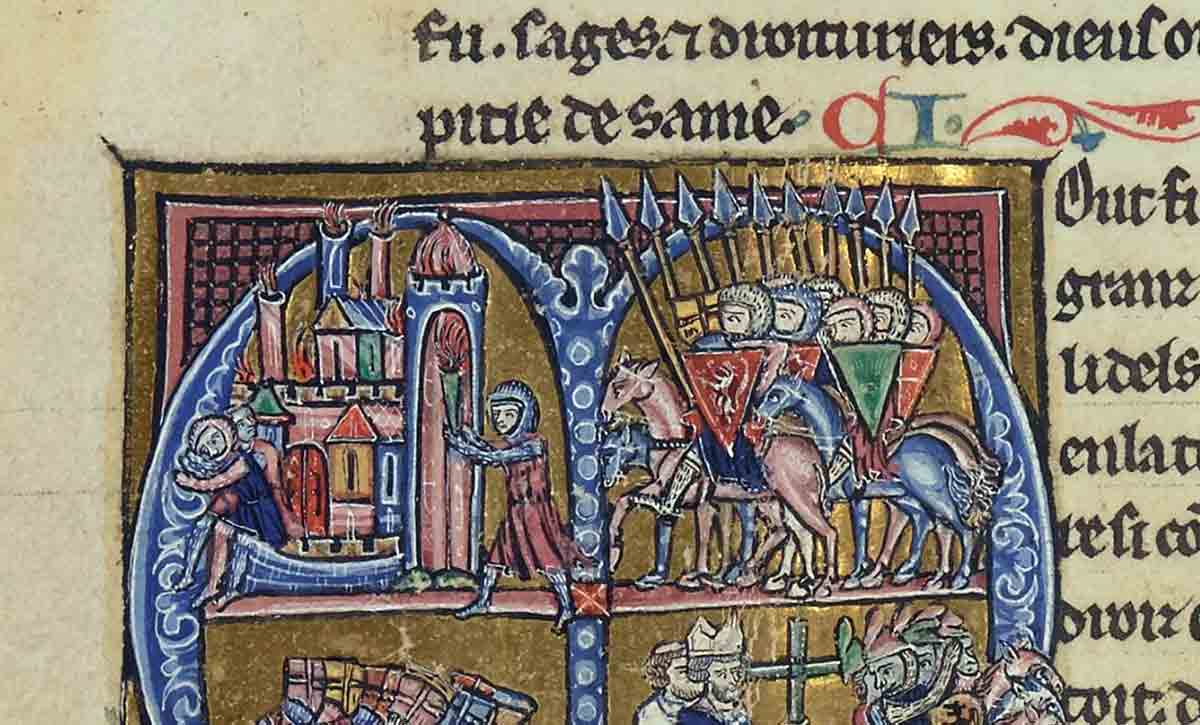
Count Philip of Flanders arrived in Jerusalem in August 1177 with a significant retinue. His arrival was met with enthusiasm, as it was hoped he would join Baldwin’s ambitious plan to launch an invasion of Egypt. With Byzantine support already secured, the proposed expedition would have seen substantial forces enter Egypt. If victorious, the invasion would have struck a crippling blow to Saladin’s base of power. However, the lack of enthusiasm from Philip of Flanders and other nobles in the Crusader States meant Baldwin’s ambitious plan came to nothing.
Philip decided to focus his energies elsewhere and joined Raymond III of Tripoli in attacking Harim, a Muslim-held stronghold in northern Syria. To strengthen this expedition, Baldwin sent 100 of his best knights from Jerusalem to join Philip. A substantial crusader army, perhaps numbering as many as 2,000 infantry, also departed, along with many Knights Templar and Knights Hospitaller. Philip’s departure in September 1177 left Jerusalem weak, vulnerable, and ripe for attack.
Jerusalem Left Vulnerable
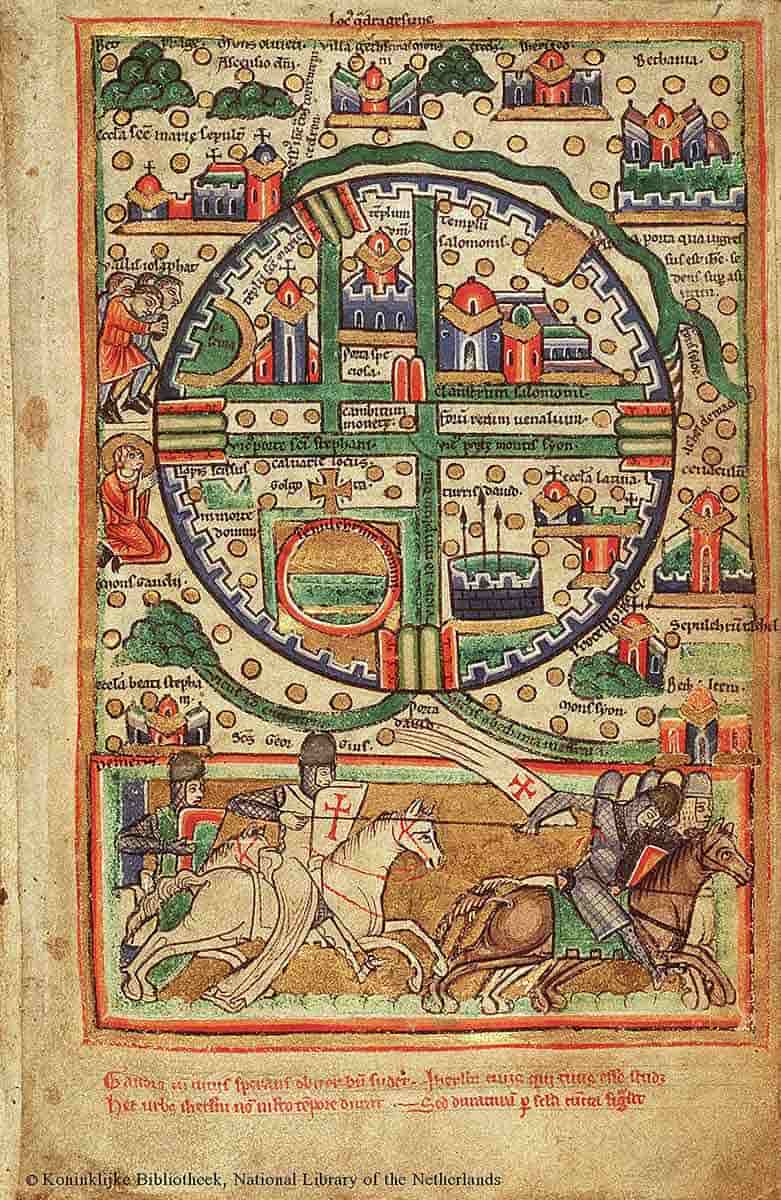
Saladin became aware of the vulnerability of the Kingdom of Jerusalem and took advantage of this fortuitous circumstance. He assembled a large force and made his way from Egypt, heading north towards Gaza in November 1177, intending to invade the southern part of the kingdom.
Saladin’s motives are unclear; he may have wished to distract the forces attacking Harim, or he may have sought to deal a critical blow to Baldwin and Jerusalem directly. Whatever his intentions, Saladin, spurred on by his knowledge of Baldwin’s vulnerability, was rash and overconfident. He made the decision to leave his heavy baggage at al-Arish, taking only his lightly armed troops, and then marched towards Ascalon, a Christian stronghold.
Baldwin Responds to Saladin’s Threat
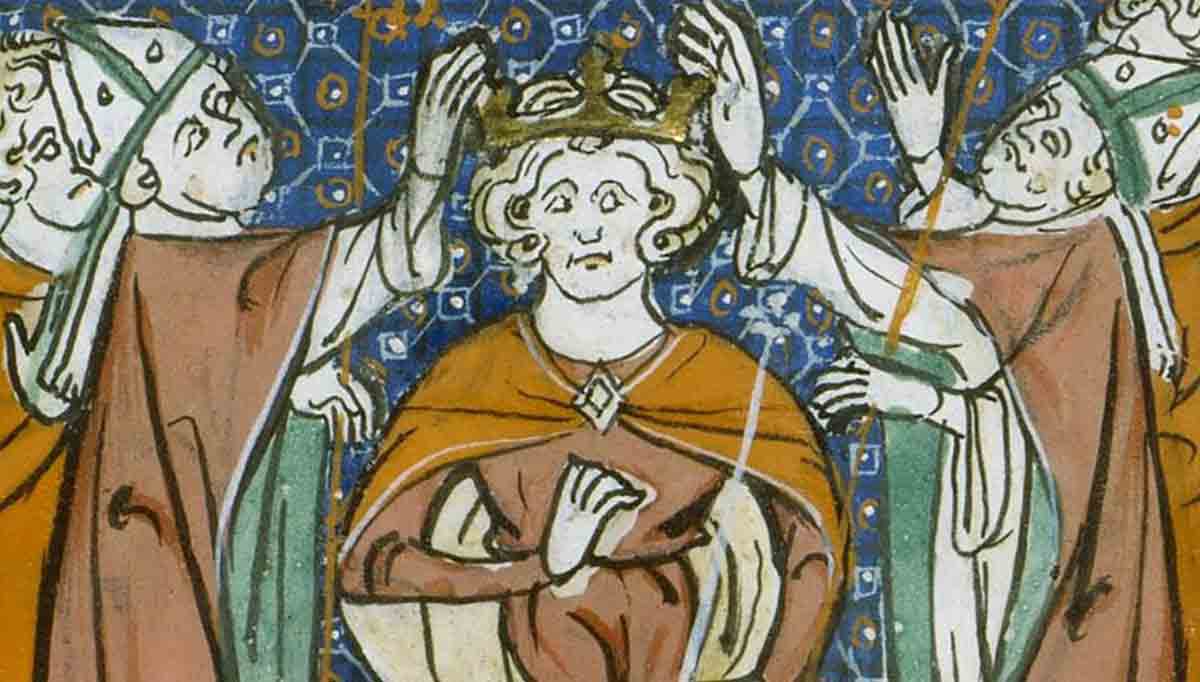
Baldwin was recovering from an illness brought on by leprosy when he learned of Saladin’s invasion. All that could be found within the entire kingdom were 600 knights, not nearly enough to face the might of Saladin. The situation seemed dire. Nevertheless, Baldwin mustered the few troops he had and marched to Ascalon to confront his rival.
At Ascalon, Baldwin issued an arrière-ban, a royal proclamation calling all able-bodied men to arms. Such proclamations were rare and used only in the most extreme circumstances. Baldwin waited within the city walls, anticipating Saladin’s arrival.
The sultan reached Ascalon on November 22, 1177, emboldened by his superior numbers. Baldwin led a force outside the city to assess his opposition. Saladin’s forces dwarfed his own, and after a short engagement, Baldwin retreated into the fortress of Ascalon. The king could only watch as reinforcements arrived to swell Saladin’s already large army.
Reinforcements also arrived for Baldwin in response to his arrière-ban. However, as they attempted to reach Ascalon, Saladin’s men seized many of them, strapped them to camels, and sold them into slavery. Baldwin could only watch in despair. The situation seemed hopeless, and the outcome appeared to be a foregone conclusion.
The Road to Montgisard
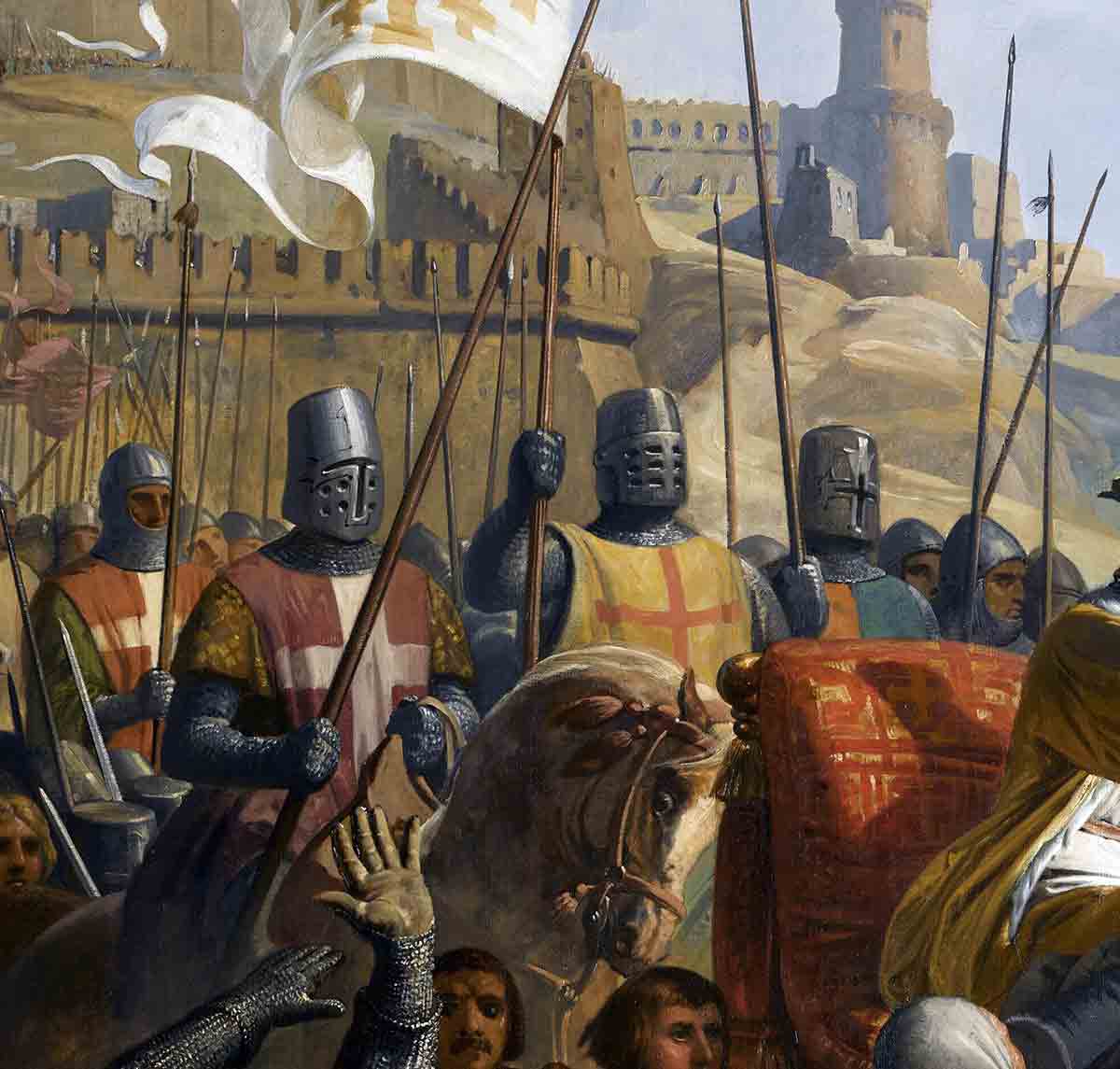
Saladin then did something unexpected: he divided his army. Feeling no threat from Baldwin, he separated his troops into detachments to pillage the surrounding areas. Saladin himself led a detachment north. He arrived at Ramla, and the Christian inhabitants fled to Jaffa. His men burned villages in their wake. They then moved on to Lydda, causing destruction and mayhem as they advanced.
Baldwin learned of the destruction and suffering of his people, and a sense of honor prevented him from remaining within the walls of Ascalon. His duty, his lineage, and his office compelled him to act.
Foolishly, Saladin did not expect Baldwin to leave the confines of the fortress and failed to leave a detachment to monitor the city and the king’s movements. This oversight allowed Baldwin to coordinate with a group of Templars stationed at Gaza and plan an attack.
Saladin, emboldened by his victories and superior numbers, reached the hill of Montgisard on November 25, 1177. The sultan had dispersed his men to raid the nearby countryside. He and his troops were preparing to cross a stream when he was caught off guard.
Baldwin and his host appeared before Saladin, severely outnumbered but filled with courage and emboldened by faith. Albert, Bishop of Bethlehem, carried the True Cross before the army. This relic had previously secured victory for the Crusaders and the Kings of Jerusalem; it was now needed more than ever.
Baldwin took a moment for prayer and reflection before rousing his troops for the forthcoming battle. Weakened by illness caused by leprosy, the 16-year-old Leper King who defied a death sentence, stood before his men. Despite his youth, his relative inexperience in warfare, and his disfiguring condition, his troops trusted him implicitly.
The Battle at Montgisard
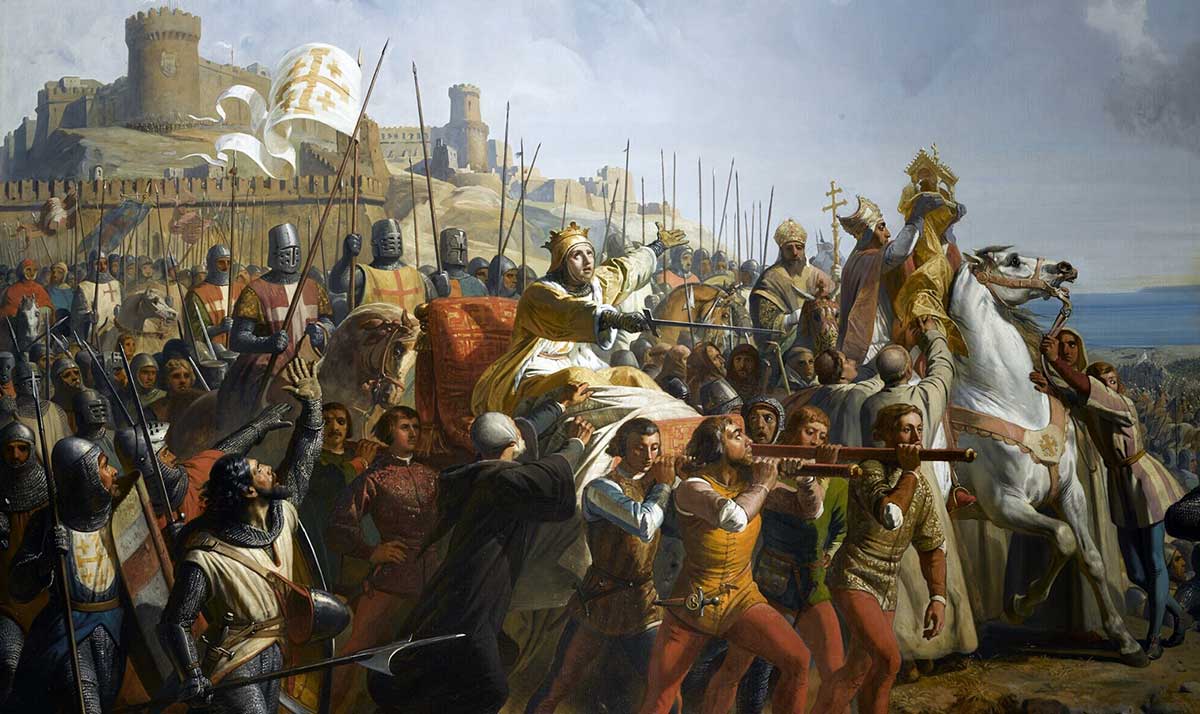
Baldwin was the overall commander at Montgisard, but he benefited from the military experience of others, in particular Reynald of Châtillon, a seasoned warrior recently released from Muslim captivity after 15 years. If Baldwin’s courage faltered, Reynald’s desire for vengeance would have spurred him forward. But Baldwin’s courage did not fail; his desire to protect his people, his kingdom, and his crown was paramount.
Saladin sent out messengers ordering his scattered troops to return. Trumpets sounded, and drums rolled, calling his men to arms. As Saladin’s troops regrouped, Baldwin formed his battle lines and prepared to attack. The cavalry was placed at the front, with the infantry forming a line behind them.
Saladin’s troops were still in disarray when Baldwin launched his surprise attack in the afternoon. William of Tyre wrote that at first the battle was indecisive, but Saladin’s lines were soon broken by Baldwin’s forces, emboldened by faith.
Saladin’s great-nephew was killed in the battle. One of the Franks nearly reached Saladin himself but was slain before he could land a blow on the sultan. The region was then plagued by relentless winter rains for the next ten days, making it impossible for Saladin to regroup his forces.
A Victory for Baldwin
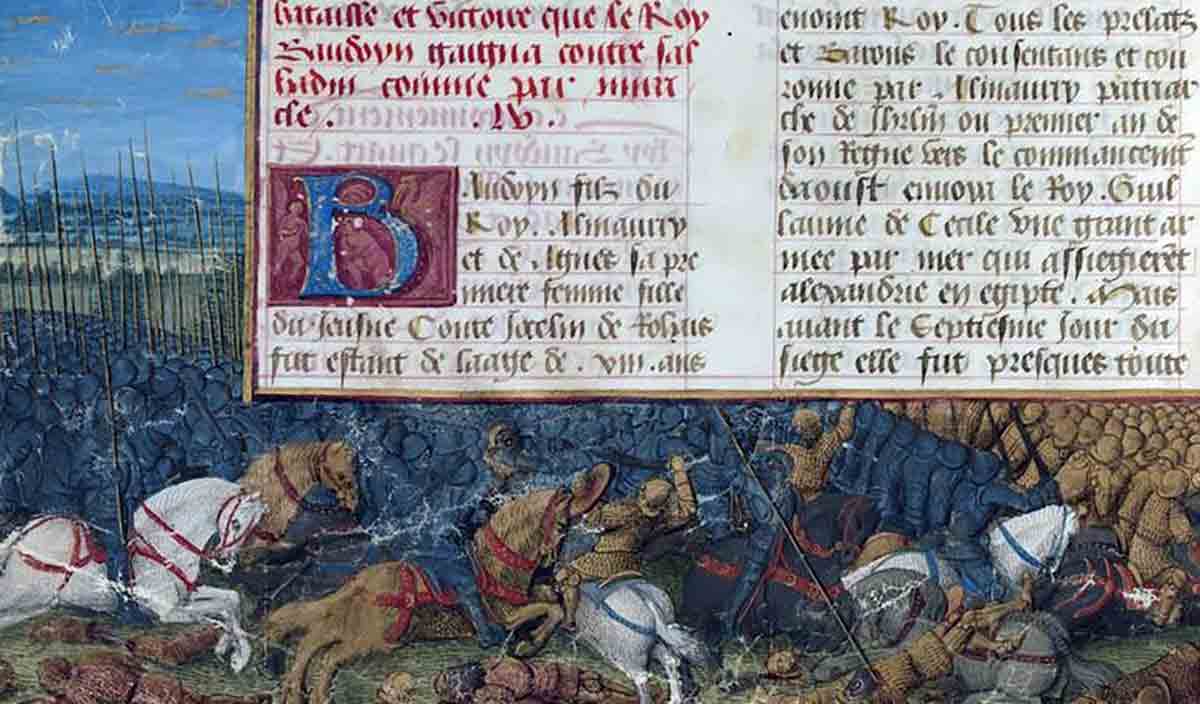
After Baldwin’s troops slaughtered many of Saladin’s forces, the Muslims retreated twelve miles to a swamp when night fell. They were relentlessly pursued by the Christians. Many fell to the sword; others were captured and sold into slavery.
The only men in Saladin’s army who did not flee were his Mamluk guard. Dressed in yellow, this 1,000-strong force acted as Saladin’s personal bodyguard. They clashed fiercely with the Frankish troops as Saladin dismounted his horse and mounted a racing camel. The Mamluks did not cease their desperate fighting until their sultan had escaped.
Saladin was stunned by this surprise Frankish attack and the swiftness of Baldwin’s victory. The 16-year-old king had achieved his first significant triumph. His reputation as a heroic warrior, in the manner of his forefathers, was born at Montgisard. This was no standard battlefield victory. Baldwin had defeated the mighty Saladin against formidable odds. His triumph was seen as an affirmation of divine approval for his kingship and for his kingdom.
William of Tyre estimates Baldwin’s forces at 375 knights against Saladin’s combined force of 26,000 light cavalry. This figure must be treated cautiously, as it likely emphasizes the odds Baldwin faced, especially when other contemporary sources claim Baldwin lost over 1,000 men. Nevertheless, Baldwin was severely outnumbered, perhaps by as much as three-to-one. He may have commanded around 3,000 infantry and 580 cavalry against Saladin’s 6,000 light cavalry and 2,660 heavy cavalry.
The Aftermath of Montgisard
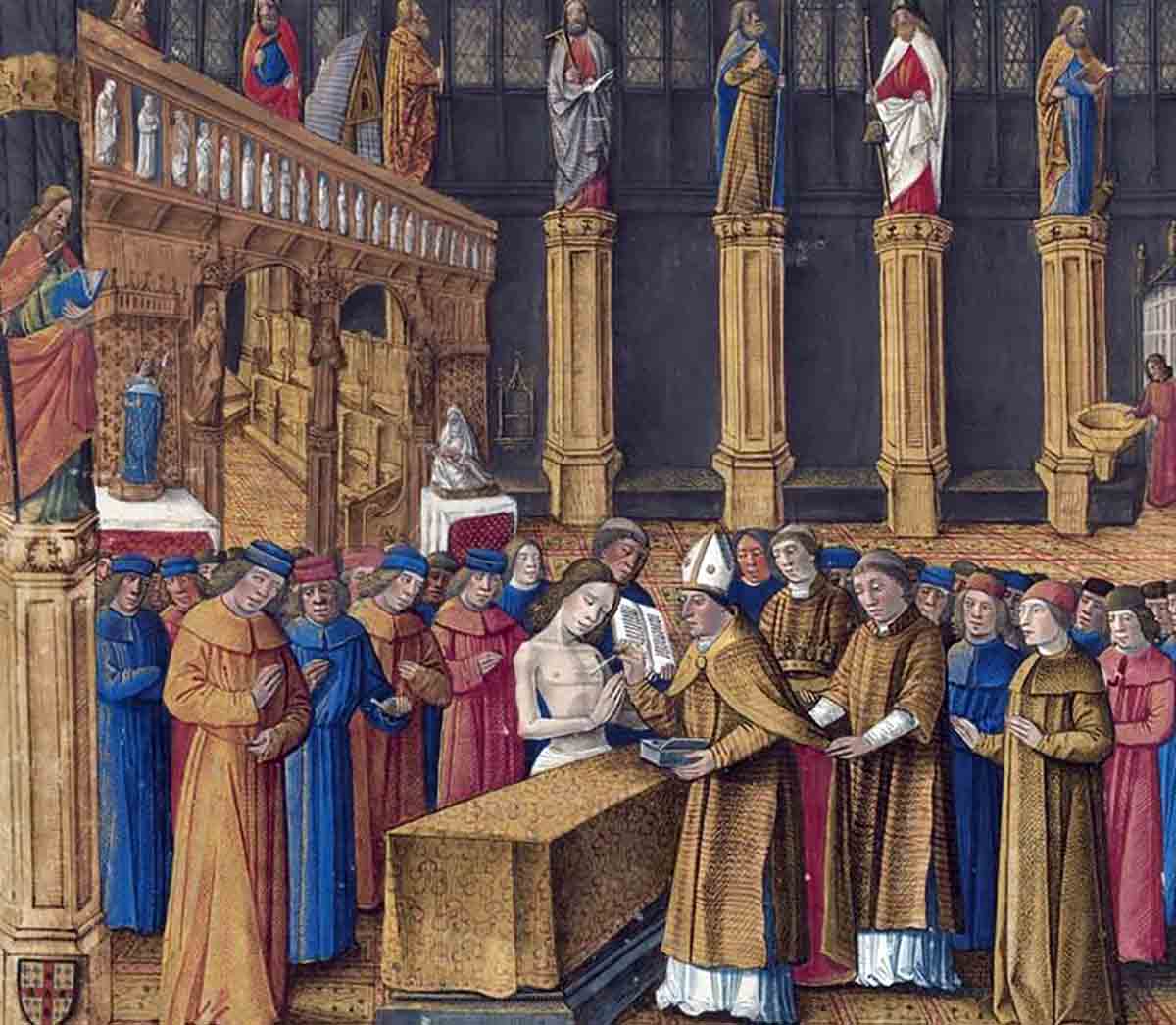
The Hospitallers cared for the wounded, who numbered around 750. These were carried back to Jerusalem, while Baldwin returned to Ascalon to await those troops who had pursued Saladin’s men far from their original objective. Baldwin distributed the collected booty and celebrated his great victory.
The Battle at Montgisard was memorialized by its victor in the construction of a Benedictine monastery on the site of the battle, dedicated to St Catherine of Alexandria.
Baldwin knew that this victory was not decisive and that Saladin would return with renewed determination. In preparation, he ordered the construction of a new castle of Chastelet at Jacob’s Ford in 1178.
Fresh attacks from Saladin were launched throughout the Leper King’s reign, but the Battle of Montgisard held a special place in Frankish memory. Eighty years later, during the Seventh Crusade, there were still those who recalled Baldwin’s victory at Montgisard, the Leper King who defeated the mighty Saladin against seemingly impossible odds.